Waterloo at a Glance
Welcome to Waterloo, at the Gateway to Brussels
Nestled in Walloon Brabant, just 16 km south of Brussels, Waterloo spans 2,102 hectares, including 99 hectares of forest that form part of the majestic Sonian Forest.
Its name, meaning « wet meadow », might be humble, but its history is anything but. In fact, Waterloo’s early fame came from its expert pavers. Legend has it that even Moscow’s Red Square was paved by skilled workers from here!
Today, Waterloo is home to over 30,000 residents, including 6,000 internationals from 110 countries. The town is proudly twinned with Rambouillet (France) and Nagakute (Japan).
The « Waterloo connection »
Waterloo is unique — the only town that still bears the physical traces of a battle that changed the course of European history: the Battle of Waterloo, on June 18, 1815.
A symbol of victory over one of the most formidable opponents in history, Waterloo’s name has since been adopted by 126 places worldwide, many named by veterans of that defining day.
Since 1996, the Waterloo Connection has linked these towns in a spirit of peace, friendship, and cultural exchange.
Famous Faces of Waterloo
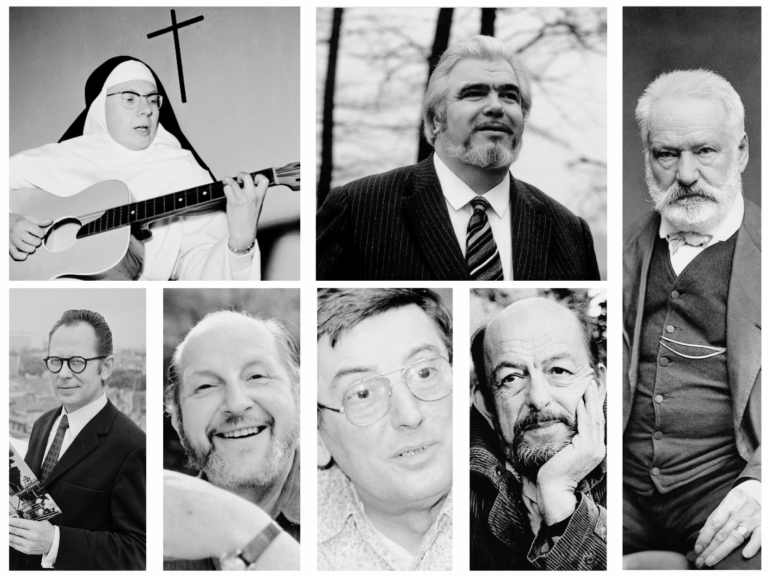
Several famous people have lived in Waterloo:
Sœur Sourire (« The Singing Nun »). Who doesn’t remember « Dominique, -nique,- nique… », her song topped the U.S. charts in 1963, outselling Elvis and The Beatles that year. She lived at the Fichermont Convent, near the iconic Lion’s Mound.
Morris, the creator of Lucky Luke, was part of the legendary « Waterloo Gang of Four » with fellow comic artists Jijé (Spirou et Fantasio), Will (Isabelle), and Franquin (Gaston Lagaffe).
Jules Bastin, world-renowned opera singer, has the town’s cultural hall named in his honor.
Victor Hugo, French writer, stayed in Waterloo in 1861. Fascinated by the Waterloo battlefield, he completed his famous book Les Misérables there.
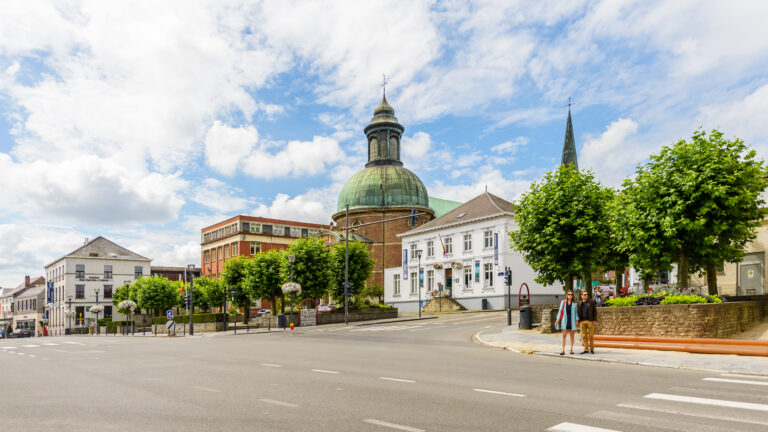
©WBT – J.P. Remy
Historic, the pavers’ village
Waterloo has been inhabited since the Palaeolithic era.
It was in 1145 that the name of the locality appeared in texts, in the form of a place called WATERLOTS.
However, Waterloo was still a long way from being a market town, a stopover village at the entrance to the Sonian Forest, known and appreciated by travellers, soldiers and notables.
The town grew significantly in the 16th and 17th centuries thanks to its strategic position along the Brussels–Genappe route, a key link to the coal-mining regions.
In addition to a few farms and inns, the town was occupied by foresters, attracted by the proximity of Brussels and a road that facilitated the sale of their charcoal.
Waterloo served as a staging post for travellers who were happy to have escaped unscathed from the dark and mysterious Sonian Forest, which was a breeding ground for brigands.
Each landmark of Waterloo has a story to tell. Like the Royal Chapel, built in 1690 in honor of King Charles II of Spain by the Marquis of Gastañaga, then Governor of the Spanish Netherlands, in a hope that never came to be: the birth of a male heir to secure the royal succession.
Finally, Waterloo came under the sway of Jacques Pastur, known as ‘Jaco’, a sort of mercenary in the pay of either France or Spain, who had the privilege of defeating the English troops of the Duke of Marlborough (the famous Malbrouk of the song) in 1705.
For a long time, the economic vocation of the locality was mainly agricultural.
By the 19th century, Waterloo had evolved into a bustling village with windmills, breweries, distilleries, a sugar factory, and several paving companies : the latter earning it an international reputation.
Today, Waterloo continues to thrive, blending heritage with modernity. The town boasts elegant shops, a vibrant cultural scene, and is home to several major European company headquarters.
A Short History of Waterloo Tourism
Founded in 1966, the Waterloo Tourist Office has been welcoming visitors for nearly 60 years. In the 1990s, the growing interest in the famous battle and large-scale reenactments helped expand its mission.
The year 2000 marked a turning point with the creation of the «Maisons du Tourisme» (tourist centres) recommended by the Minister of Tourism at the time. Meeting the criteria of multilingualism and opening hours, our SIT became a Maison du Tourisme, responsible for managing tourism in five communes in close collaboration with them. These are the four areas where the battle took place (Braine-l’Alleud, Genappe, Lasne and Waterloo) plus La Hulpe, with the Folon Foundation as its flagship attraction.
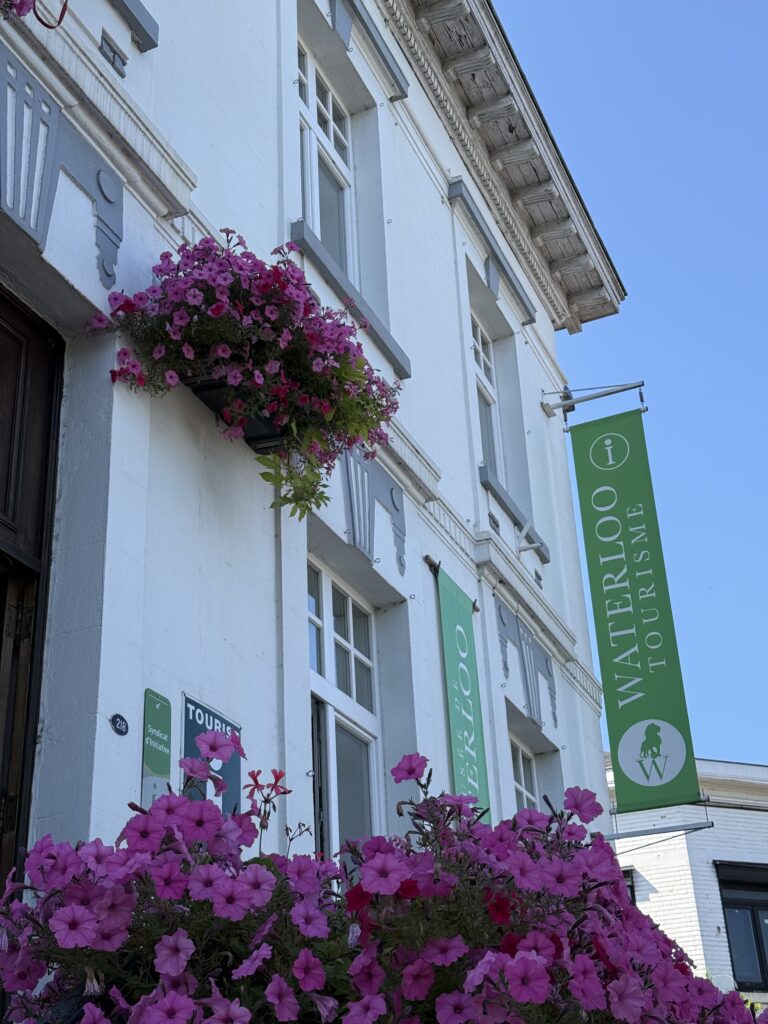
Initially housed at 149 Chaussée de Bruxelles, next to the Wellington Museum, the office moved in 2003to its current location at 218 Chaussée de Bruxelles, sharing the building with the Waterloo Museum (on the 1st floor).
As the 2015 bicentenary of the Battle of Waterloo approached, the town and its tourist services gained international attention.
Since 2017, the organisation has once again held the status of a Syndicat d’Initiative, and to mark its 50th anniversary, it was honoured with the title Royal.
Our multilingual team is here for you 7 days a week, year-round (excluding 24 December and 1 January), offering tailored advice and a warm welcome to visitors and locals alike.