-
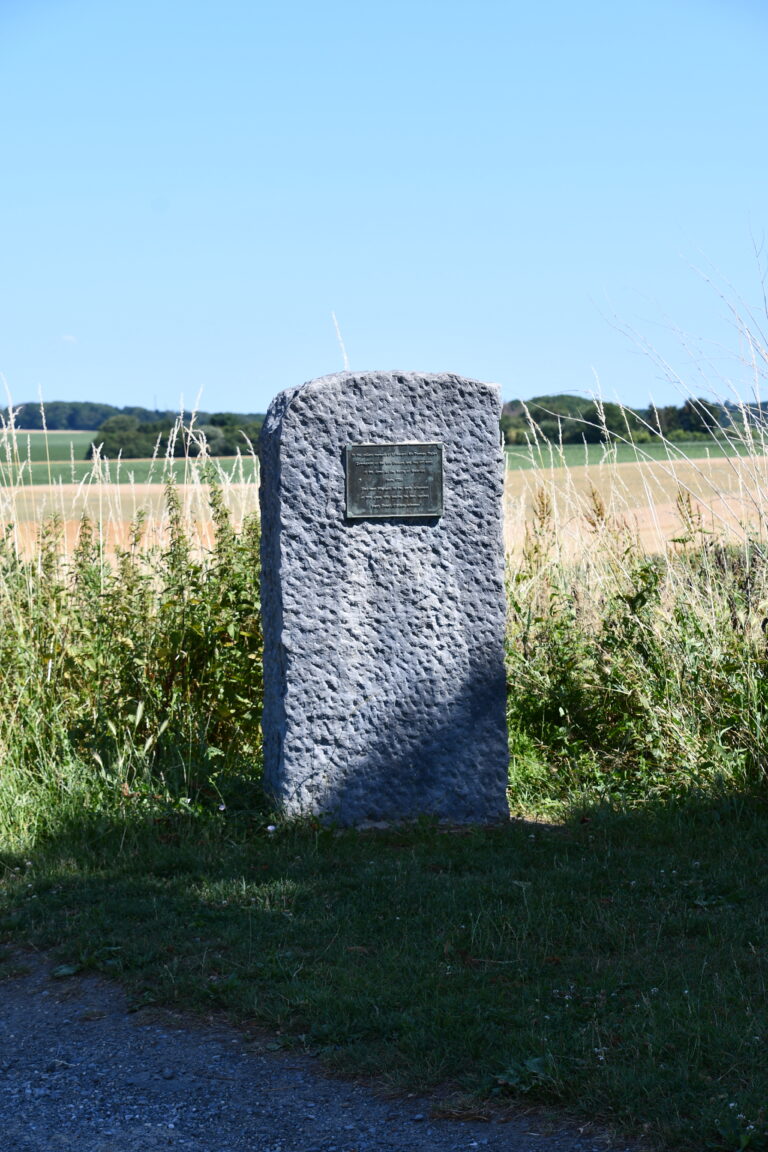
Picton Stele
Marks where General Sir Thomas Picton, wounded the day before at Quatre-Bras, fell on 18 June 1815 at the head of his troops on the battlefield of Waterloo.
Nicknamed the «Jacketed Warrior,» famed for commanding in Quatre Bras and Waterloo his characteristic top hat and umbrella, this Welsh general died leading his troops.
The stele stands on the spot where he fell, commemorating the crucial role he played in the battles surrounding the decisive encounter with Napoleon.
-
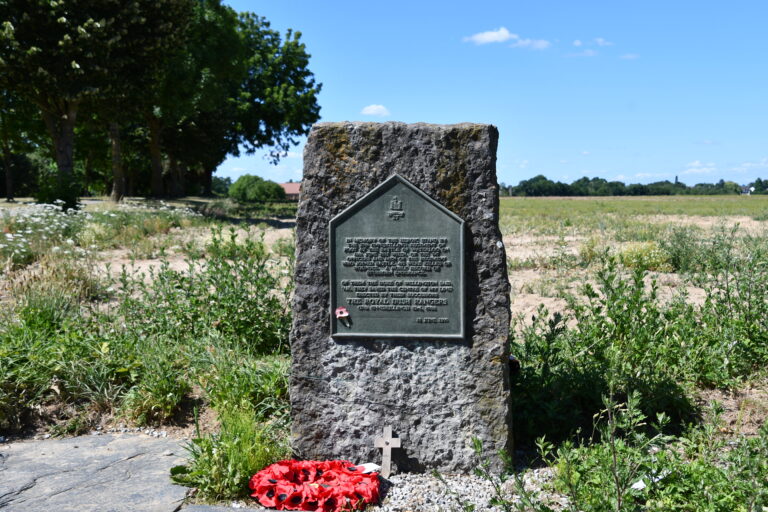
Royal Irish Rangers Stele
Located on the Waterloo battlefield, the Royal Irish Rangers Monument pays tribute to the Irish soldiers who fought alongside the British army in the famous battle of 18 June 1815. At the time, many British regiments included troops from Ireland, who fought under the command of the Duke of Wellington against Napoleon’s forces.
This monument commemorates the sacrifice and courage of these men, who came from far and wide to take part in a confrontation that would prove decisive in the history of Europe. Erected by The Royal Irish Rangers regiment, it symbolises the memory of the Irish regiments and perpetuates the link between past and present.
-
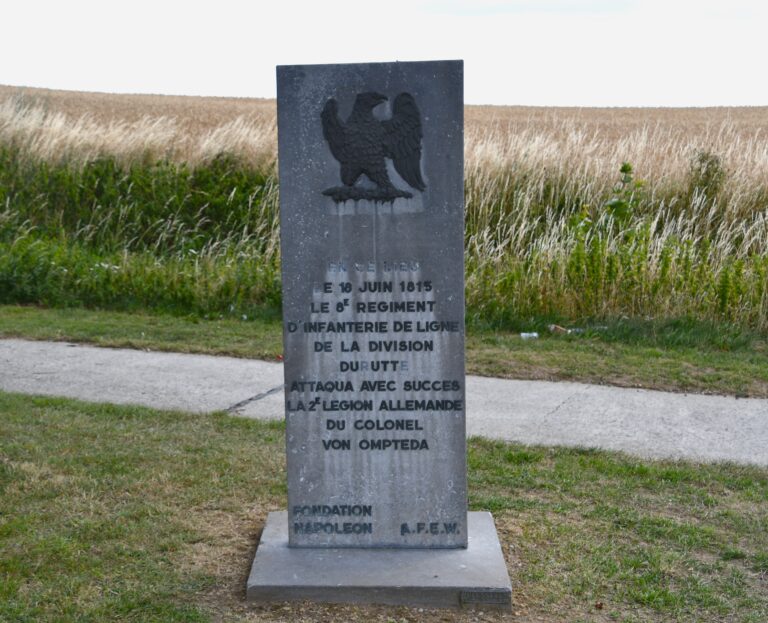
8th Line Infantry Regiment Stele
The 8th Line Infantry Regiment was one of the French units involved in the most violent assaults of the Battle of Waterloo.
This stele, erected close to the battlefield, pays tribute to this regiment, which distinguished itself by its bravery and tenacity.
During the fighting, the 8th was involved in attacks on Allied positions near La Haye Sainte, a strategic point defended tooth and nail by the British. Despite being battered by enemy rifle and artillery fire, the soldiers of the 8th continued to advance under the orders of their officers, embodying the stubbornness of Napoleon’s army right up to its final moments.
-
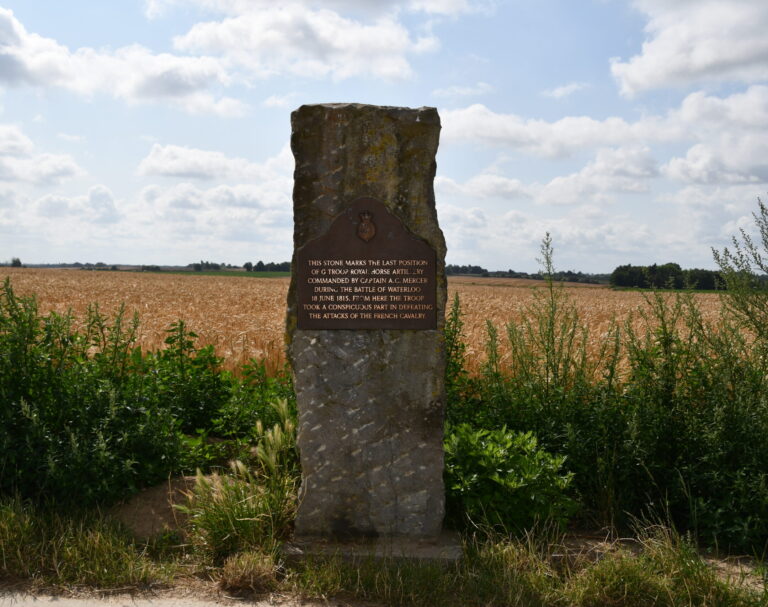
Royal Horse Artillery Marker
The Royal Horse Artillery (RHA) stele marks one of the positions held by this prestigious British unit during the Battle of Waterloo.
Attached to the Duke of Wellington’s army, the RHA was distinguished by its great mobility: its light guns, mounted on wheels, were horse-drawn, allowing rapid redeployment on the battlefield. On 18 June 1815, its artillerymen played a crucial role in the defence of the Allied lines, firing at short range on the French charges.
This simple monument, sometimes overlooked by visitors, is a reminder of the extreme tension of that day, when every piece of artillery could change the course of a confrontation.
Chemin des Vertes Bornes, 1420 Braine-l’Alleud (path between the Lion’s Mound and Hougoumont)
-
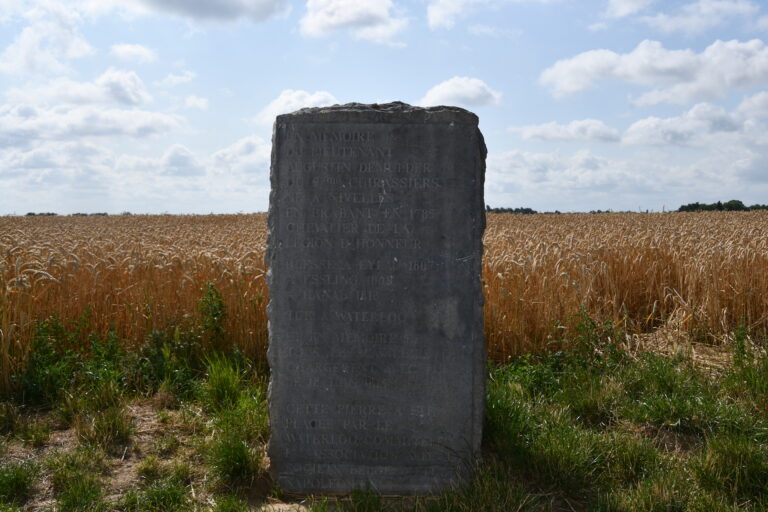
Augustin Demulder Stele
This stele pays tribute to Augustin Demulder, a young Belgian soldier who joined Napoleon’s Great Army.
Born in Lessines in 1797, he joined the ranks of the 2nd Regiment of Imperial Guard infantry Hunters, an elite unit. On 18 June 1815, aged just 18, Augustin was killed in action during the final stages of the Battle of Waterloo. His stele stands on the very spot where he was found, a reminder of the sacrifice of thousands of young men, often anonymous, swept up in the violence of history.
It also symbolises the complex destiny of Belgians in 1815: some fought for Napoleon, while others were the side of the Allies.
Today, this modest stone marks a suspended moment in the past, a tribute to youth lost in the clash of empires.
Chemin des Vertes Bornes, 1420 Braine-l’Alleud (path between the Lion’s Mound and Hougoumont)
-
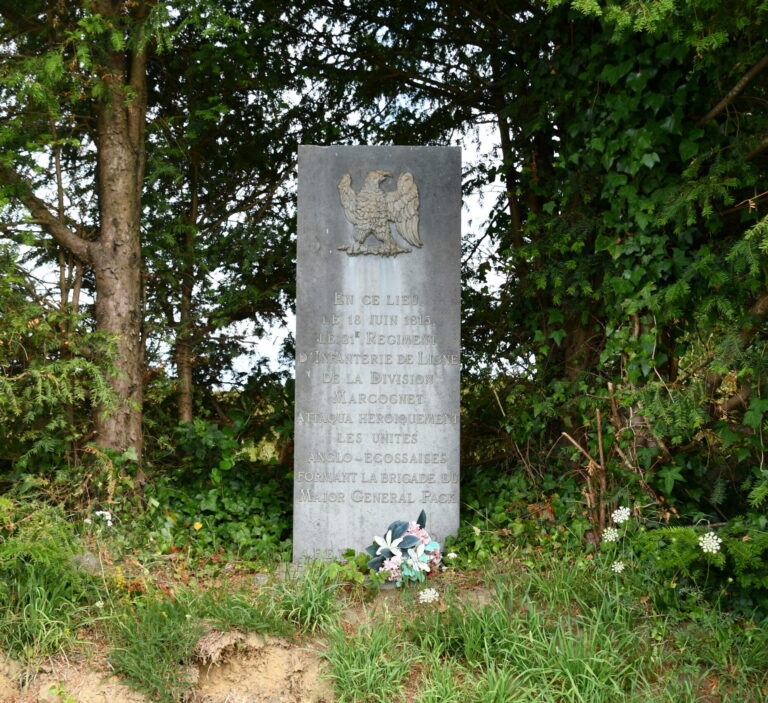
21st Line Infantry Regiment Stele
This stele is located about 500 metres east of the Lion’s Mound, near Haie Sainte Farm. It commemorates the French 21st Regiment (Marcognet Division), who mounted a courageous attack on Anglo Scottish positions which belonged to the brigade commanded by Major-General Pack.
Their assault, though brave, met fierce resistance, illustrating the violence and intensity of the fighting that took place that day.
This stele is a reminder of the sacrifice and bravery of the French soldiers involved in this crucial phase of the battle, contributing to the historical memory of this decisive confrontation.
-
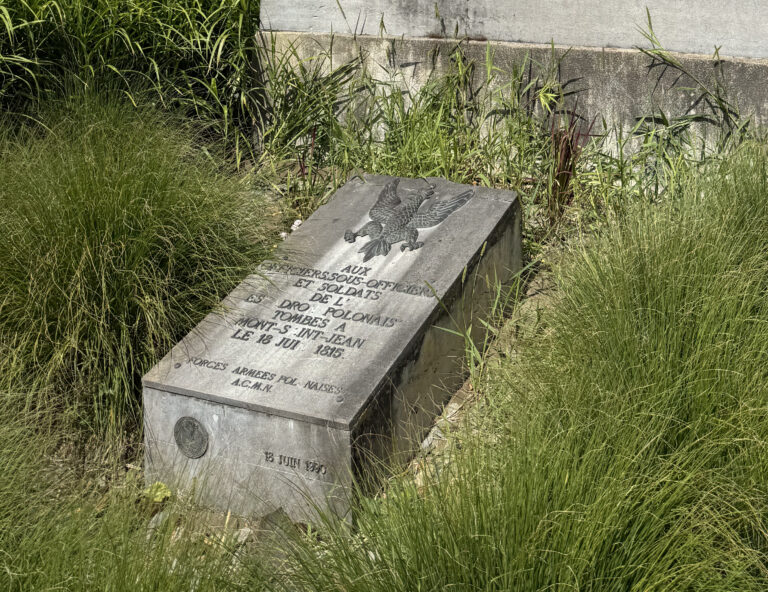
Polish Squadron Stele
Located at the base of the Wounded Eagle Monument, the stele commemorates the 109 Polish soldiers of Napoleon’s Imperial Guard who fought in Waterloo. They were noted for their courage at the battle’s end.
As one of the Grande Armée’s foreign units, the Polish squadron played an important role in the final stages of the battle.
The stele honors the Polish soldiers who stood by the Emperor during a turbulent and complex period in Europe’s history.
-
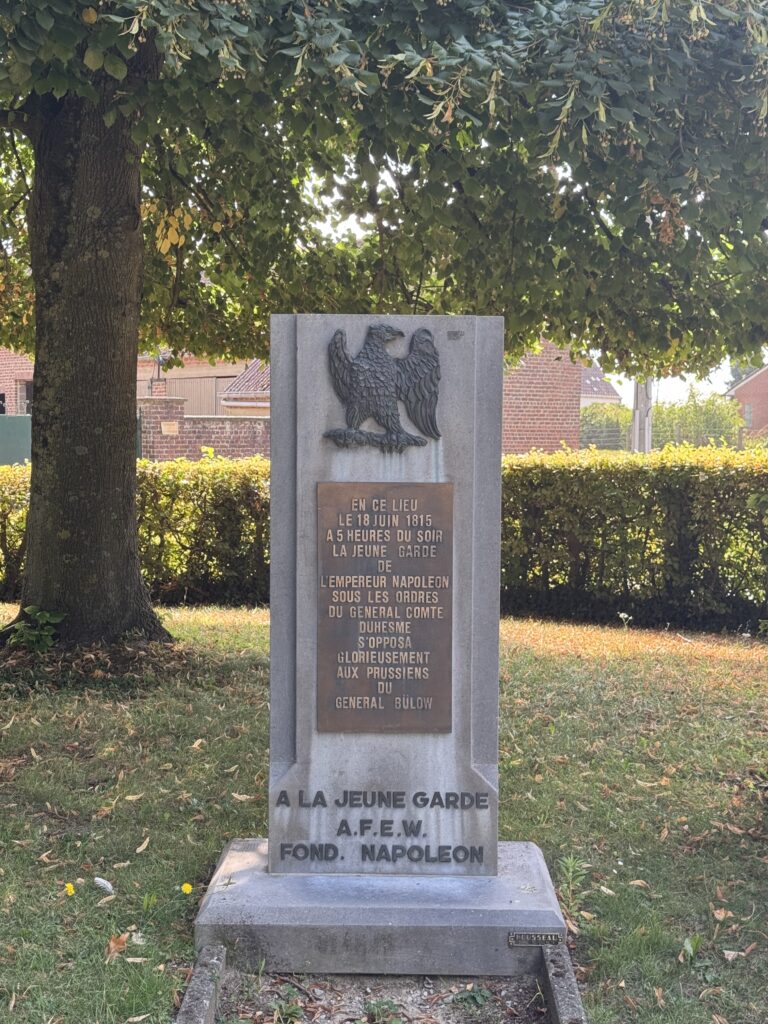
Stele to the Young Guard
This stele honors the soldiers of Napoleon’s Young Guard who felle during the battle. They were young recruits who nevertheless fought in the final clashes, particularly around Plancenoit.
This sober and moving monument commemorates the sacrifice of the soldiers who, despite their youth, faced the violence of the Prussian assaults.
-
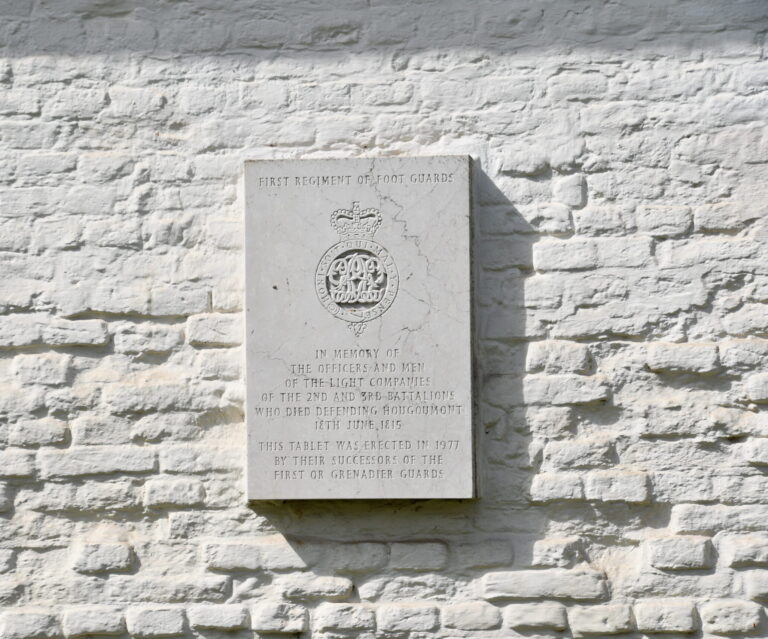
Various 1815 Plaques
In addition to large memorials and steles, Waterloo and its environs are dotted with commemorative plaques—some well-known, others hidden.
They mark regiments, officers, or specific moments, strategic spots, or symbolic places. Some were installed through national initiatives, while others were placed by families, enthusiasts, or historical associations.
For history lovers, discovering them becomes a treasure hunt through the landscape.